power supply concepts
How to Choose an AC to DC Power Supply for a Defined Load
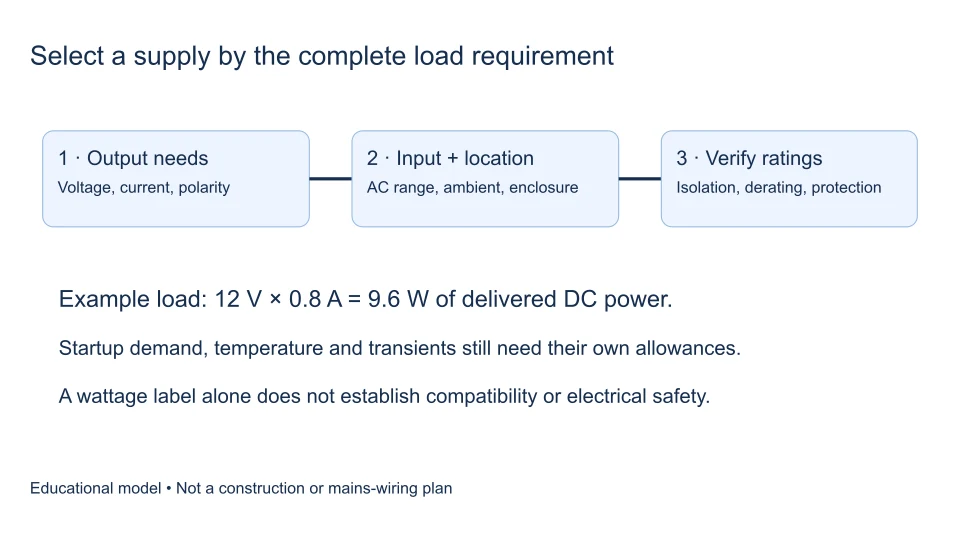
Match DC voltage, continuous and peak current, input range, derating, isolation, and protection to the actual requirements of your equipment.
 AC/DC Calc. A little more clarity.
Explanations and examples to help you understand rectifier output.
Match DC voltage, continuous and peak current, input range, derating, isolation, and protection to the actual requirements of your equipment.
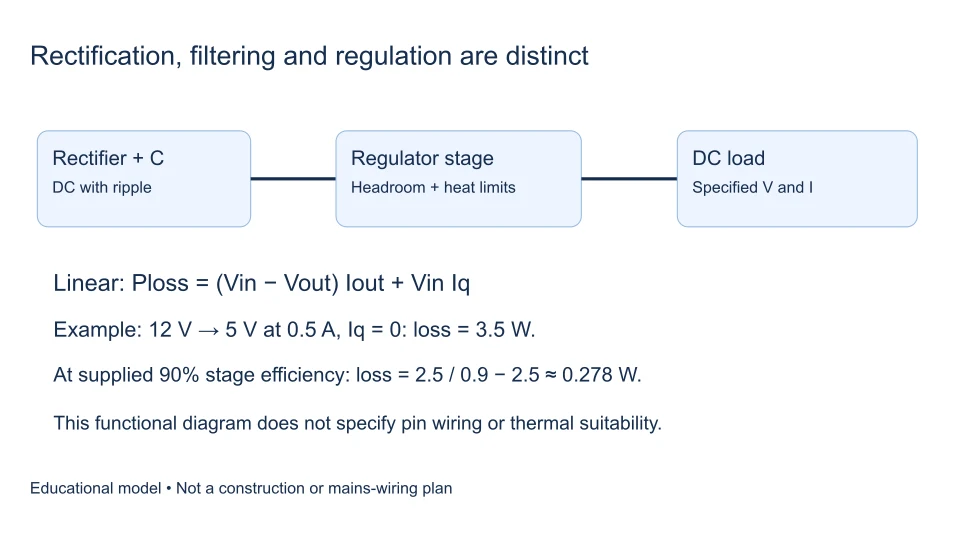
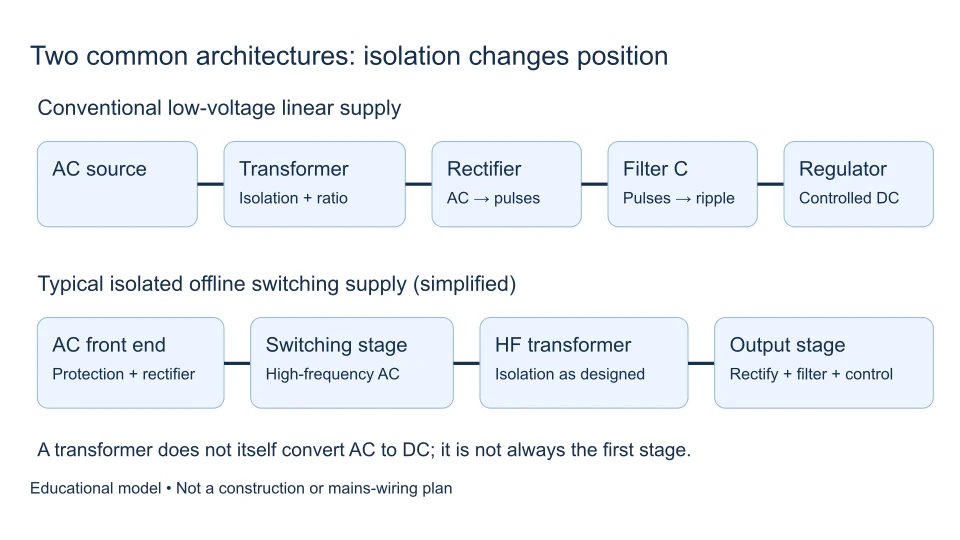
Compare conventional linear and switching supplies by conversion stages, regulation, heat, ripple, efficiency, and the needs of the actual load.
Follow the signal through a conventional transformer supply and an isolated switching supply, and see why rectification alone is not regulation.
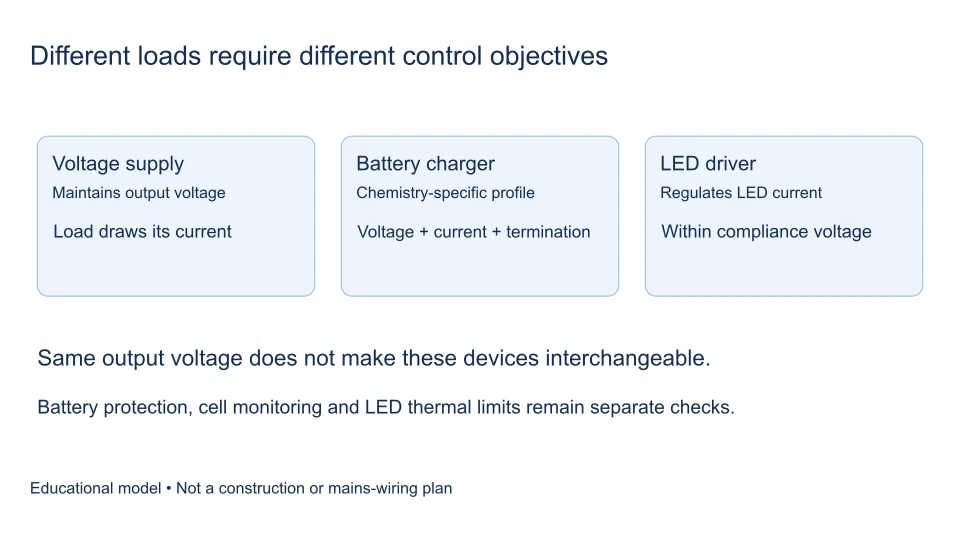
Understand why a DC voltage supply, chemistry-specific battery charger, and constant-current LED driver need different control and protection.
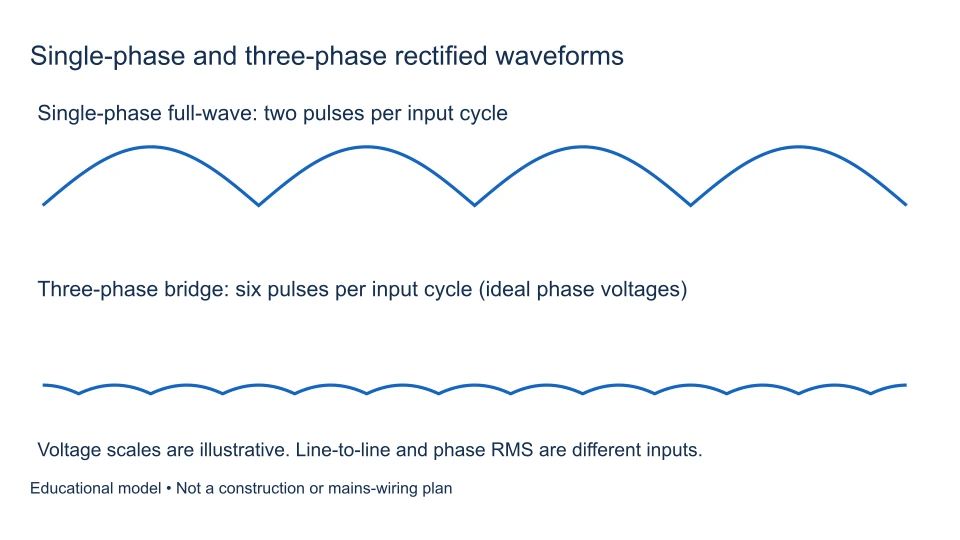
Compare bridge topology, line-to-line input voltage, six-pulse timing, capacitor charging, and the assumptions behind three-phase output estimates.
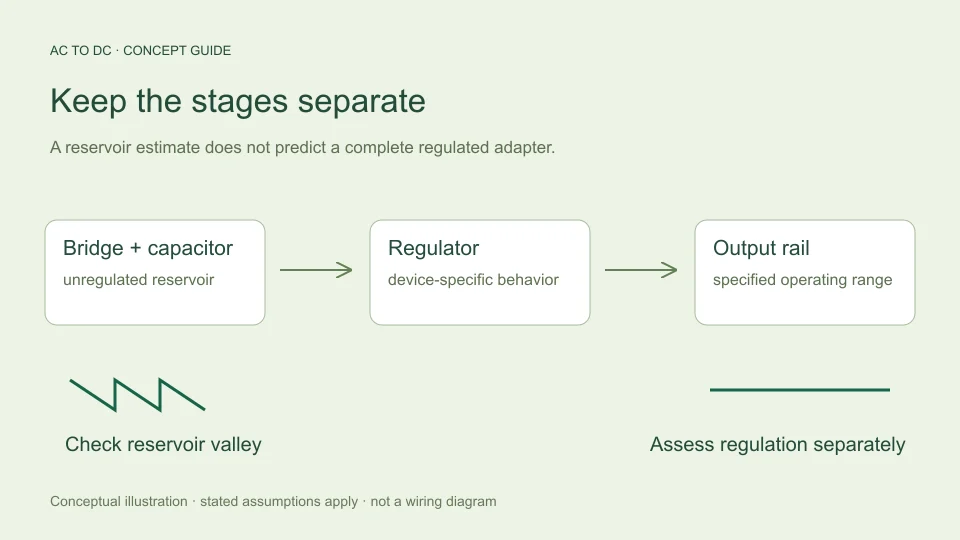
Understand why a rectifier estimate is not a prediction of an adapter or regulated output.
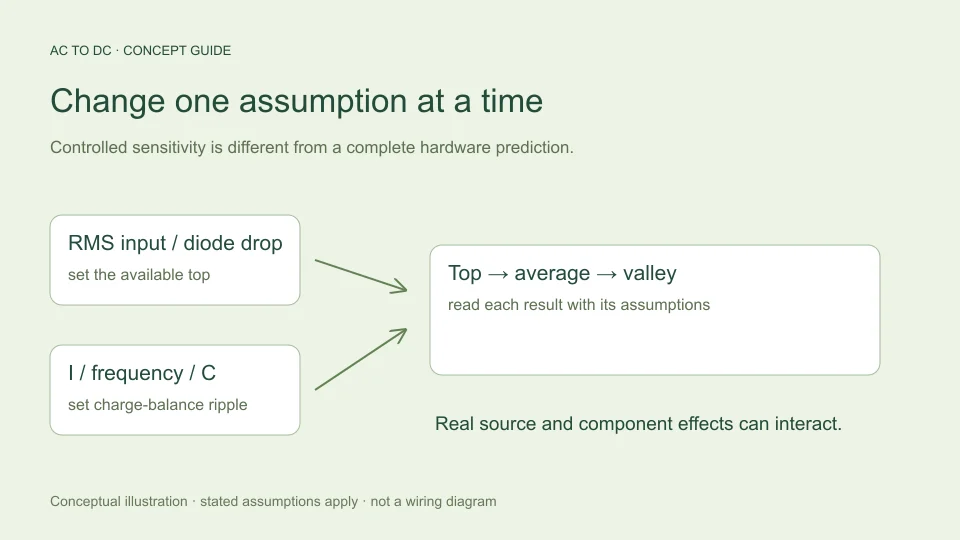
Use controlled comparisons to distinguish arithmetic changes from effects outside a simplified rectifier model.